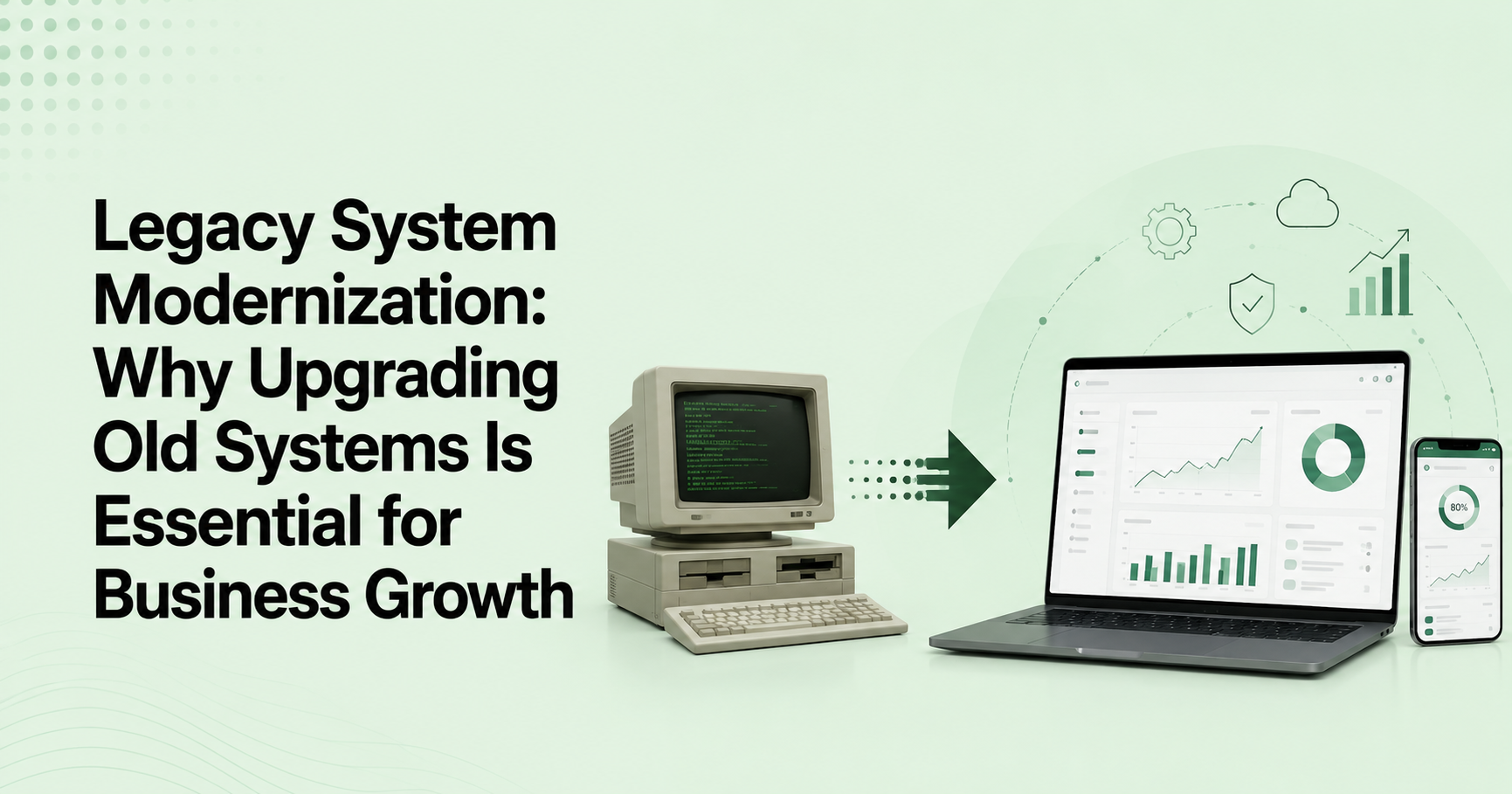

Why Upgrading Old Systems Is Essential for Business Growth
In today’s fast-evolving digital landscape, businesses must prioritize speed, efficiency, and adaptability to remain competitive. Despite rapid technological advancements, many organizations continue to rely on legacy systems—outdated software, infrastructure, or applications that once supported operations effectively but now limit scalability, innovation, and long-term growth.
Although these systems may still perform core functions, they often create operational bottlenecks, increase maintenance costs, and prevent organizations from adopting modern technologies. As industries continue to evolve, businesses that remain dependent on outdated systems risk losing their competitive advantage.
This is why legacy system modernization has become a strategic priority for forward-thinking organizations.
Modernizing legacy systems enables businesses to improve operational performance, strengthen cybersecurity, enhance scalability, and build a strong foundation for future digital transformation initiatives.
What Are Legacy Systems?
Legacy systems refer to older software applications, databases, hardware, or IT infrastructures that continue to support business operations despite becoming technologically outdated.
These systems often:
- Run on outdated architectures
- Use unsupported technologies
- Depend heavily on manual processes
- Lack modern integration capabilities
- Offer limited scalability
- Present significant security risks
While legacy systems may still support essential business functions, they often struggle to meet modern operational and technological demands.
Over time, maintaining these systems becomes more costly and complex than upgrading them.
Why Legacy Systems Become a Business Challenge
As businesses grow, their operational requirements become more complex. Systems that once supported day-to-day processes efficiently can eventually become barriers to productivity and innovation.
Common challenges include:
Limited Scalability
Legacy systems often struggle to handle growing workloads, increased user demand, and expanding business operations.
Poor Integration
Older platforms frequently lack compatibility with modern tools, cloud environments, and third-party applications.
High Maintenance Costs
Maintaining outdated systems requires specialized expertise, increased IT resources, and higher operational spending.
Security Vulnerabilities
Legacy infrastructure often lacks modern security standards, making it more vulnerable to cyber threats and data breaches.
Reduced Productivity
Manual workflows and inefficient processes slow teams down and impact overall business performance.
These limitations affect not only operational efficiency but also an organization’s ability to remain agile in a competitive market.
The Cost of Delaying Modernization
Many organizations postpone modernization because system upgrades can appear expensive, time-consuming, or complex.
However, delaying modernization often results in far greater long-term costs.
These may include:
- Increased downtime
- Rising operational expenses
- Missed business opportunities
- Slower product or service delivery
- Poor customer experiences
- Greater security and compliance risks
In many cases, the cost of maintaining outdated systems eventually exceeds the investment required to modernize them.
Legacy modernization should be viewed not as an expense, but as a strategic investment in future growth.
Key Benefits of Legacy System Modernization
Organizations that modernize outdated systems gain significant competitive advantages.
Improved Performance
Modern systems process workloads faster, improving overall operational efficiency.
Better Scalability
Infrastructure can scale seamlessly as business needs grow.
Stronger Security
Updated platforms offer better protection against evolving cyber threats.
Easier Integration
Modern APIs and architectures enable smooth connectivity with digital tools and services.
Enhanced User Experience
Both employees and customers benefit from faster, more intuitive digital interactions.
Greater Innovation
Modern platforms make it easier to adopt advanced technologies such as AI, analytics, automation, and cloud computing.
These benefits drive both short-term efficiency and long-term business success.
Common Modernization Approaches
There is no one-size-fits-all strategy for legacy modernization. The right approach depends on business goals, technical complexity, and budget.
Common approaches include:
Rehosting
Migrating existing systems to modern cloud infrastructure with minimal changes.
Refactoring
Improving the internal code structure while preserving existing functionality.
Replatforming
Moving applications to modern platforms with limited architectural changes.
Rebuilding
Developing entirely new systems from the ground up.
API Enablement
Adding modern integration layers to legacy systems to improve connectivity.
Choosing the right strategy requires careful assessment of both technical and business requirements.
Cloud Migration and Modern Architecture
Cloud technology plays a critical role in modernization.
Migrating legacy systems to cloud-native environments provides several advantages:
- Flexible scalability
- Lower infrastructure costs
- Improved accessibility
- Faster deployment cycles
- Better disaster recovery
- Increased uptime and reliability
Modern architectural approaches such as:
- Microservices
- Containers
- Serverless computing
- API-first development
allow businesses to build highly scalable, resilient, and future-ready platforms.
Why Modernization Requires Strategic Planning
Legacy modernization is not just a technical upgrade it is a business transformation initiative.
Successful modernization requires:
- Comprehensive system assessment
- Risk analysis
- Migration planning
- Resource allocation
- Change management
- Continuous testing and optimization
Without proper planning, modernization efforts can disrupt critical operations.
A structured roadmap minimizes risks and ensures a smooth transition.
How BAIRACORP Helps Businesses Modernize Legacy Systems
BAIRACORP Private Limited helps organizations modernize outdated systems through scalable technology solutions and strategic consulting.
Its core expertise includes:
- Legacy System Modernization
- Custom Software Development
- Cloud Migration
- API Integration
- IT Infrastructure Solutions
- Business Consulting
- End-to-End Digital Solutions
BAIRACORP evaluates existing systems, identifies modernization opportunities, and develops tailored migration strategies aligned with business objectives.
Its development approach focuses on reliability, scalability, performance, and long-term business value.
Looking Ahead
Technology will continue evolving at an unprecedented pace.
Businesses that remain dependent on outdated systems will face growing challenges in security, efficiency, and innovation.
Organizations that modernize today will be better positioned to:
- Adapt faster
- Scale efficiently
- Improve customer experiences
- Reduce costs
- Innovate continuously
The future belongs to businesses built on strong digital foundations.
Conclusion
Legacy systems may have supported business growth in the past, but they can become barriers to future success.
Modernization empowers businesses to improve performance, strengthen security, enable innovation, and build scalable technology ecosystems.
Organizations that proactively modernize gain greater agility, stronger resilience, and a lasting competitive advantage.
With deep expertise in software engineering, infrastructure, and digital consulting, BAIRACORP continues to help businesses transform outdated systems into future-ready digital platforms.
Ready to Modernize Your Business Systems?
Visit Bairacorp.in to explore how modern technology solutions can accelerate your business growth.
Empowering Businesses Through Innovation, Scalable Technology, and Digital Transformation.